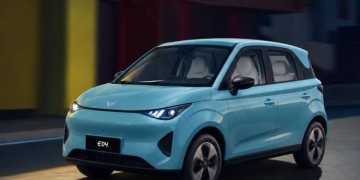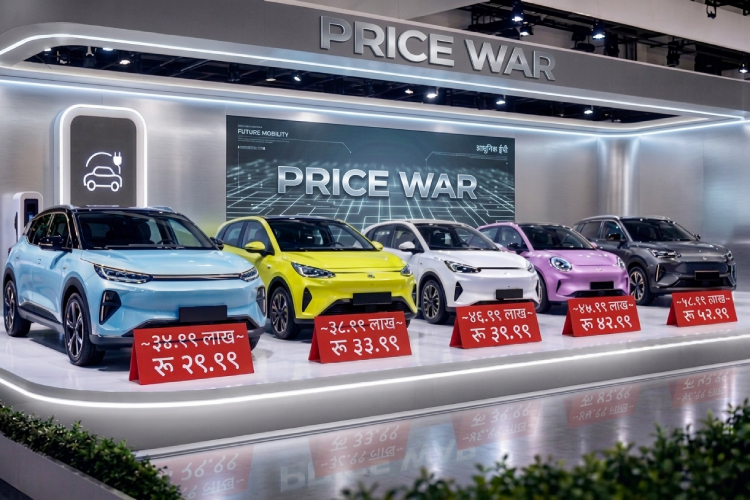
KATHMANDU: Nepal’s electric vehicle market has been witnessing a price war for nearly two years. The trend gained wider attention during the 2024 NADA Auto Show and the number of brands joining the competition has continued to grow.
The price war has intensified as EV brands compete for a larger share of the market. Some Chinese brands are using aggressive pricing to expand their presence, while others are cutting prices to remain competitive.
Lower EV taxes, changes in the taxation system and similar features across different models have pushed competition towards pricing. Brands are offering cash discounts, exchange bonuses, financing schemes and other benefits. Some have also directly reduced vehicle prices.
Until a few years ago, a customer with a budget of Rs 3 million often ended up booking a car worth around Rs 4 million. The situation has changed. Today, the same customer may be able to buy a car priced at Rs 2.6-2.7 million.
Lower prices, greater value
The most direct benefit of a price war goes to buyers. Customers can now get better-equipped vehicles within the same budget.
Competition has forced brands to offer more features to attract customers. ADAS, 360-degree cameras, large infotainment screens, connected features, premium interiors and larger battery packs are increasingly available at lower prices.
However, the price war can also affect existing owners. A vehicle bought for Rs 5 million today could be offered at Rs 4.5 million just a few months later.
Frequent price cuts can reduce the resale value of EVs. In such cases, existing customers may bear the cost of discounts offered to attract new buyers.
Pressure on dealers and service networks
Lower vehicle prices do not affect only manufacturers and customers. Dealers and service networks can also come under pressure.
Price cuts can reduce dealer margins. Lower profits can affect investment in new showrooms, technician training, service facilities and spare parts.
This is particularly important in Nepal, where the overall automobile market is relatively small. If a brand stops its operations, its existing customers could face problems with servicing, spare parts and technical support.
Buying a car is not simply about taking a vehicle home. Customers are also buying warranty support, servicing, spare parts, software updates and technical assistance.
Therefore, a low-priced EV could become a long-term problem if the brand fails to remain in the market.
What should buyers look for?
During a price war, customers should not make a decision based only on the discount offered.
They should also consider the brand’s long-term presence, vehicle and battery warranty, service network, availability of spare parts, resale value, technical capability and safety.
EV technology is developing rapidly. Battery capacity, motors, charging technology, advanced driver assistance systems and software can change significantly within a few years.
The vehicle bought today should continue to receive proper service and technical support even as the technology evolves.
Lower prices are not necessarily a bad thing. Competition can help consumers get better products at more affordable prices. However, aggressive pricing becomes a concern if brands are unable to sustain their business or support existing customers.
Ultimately, the real winner of the EV price war will be a market where lower prices come with good quality, strong after-sales support and stable resale value.