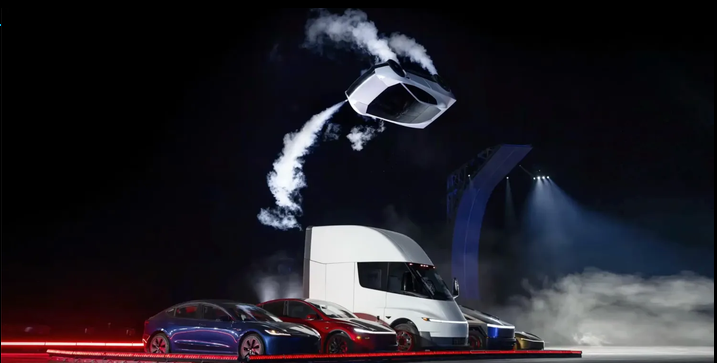
KATHMANDU: Tesla has unveiled an updated version of its next-generation Roadster. The electric sports car features a new design, extremely quick acceleration and cold-gas thrusters that can help it jump and flip through the air.
Tesla first unveiled the next-generation Roadster in November 2017 and initially planned to begin production in 2020. After several delays, the company is now targeting 2028, although a confirmed production date is still unavailable.
The new Roadster follows Tesla’s latest design style, with inspiration from the Cybertruck, Cybercab and Optimus robot. Tesla also says its design takes cues from the SR-71 aircraft and F-35 fighter jet.
The exterior features hidden headlights, a full-width rear taillight and smooth aerodynamic surfaces. The showcased car also gets an “Ano White” finish inspired by coatings used to protect rockets.
Inside, the Roadster features a steering yoke, a central touch screen and two smaller displays for the driver. It also uses lightweight materials, including magnesium, titanium and carbon fiber.
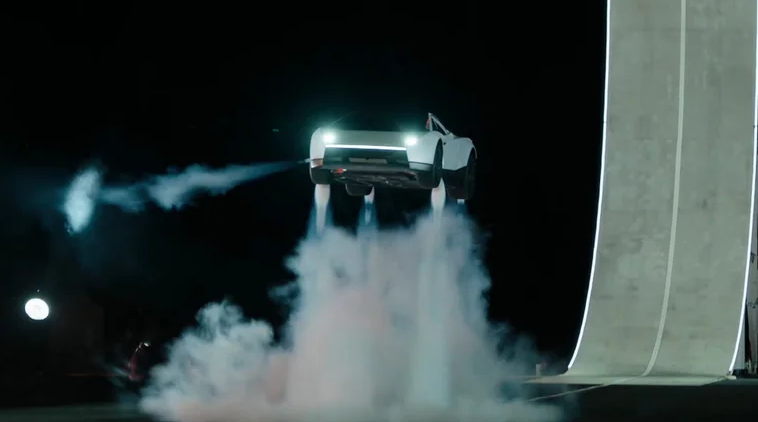
Tesla has introduced three versions of the Roadster: Performance, Thrust and Rocket.
The Performance version is designed for road use and comes with two seats, active aerodynamics and a suction system. Tesla claims it can accelerate from 0 to 97 km/h in under 1.6 seconds.
The Thrust version adds cold-gas thrusters at the rear. Tesla claims it can reach 97 km/h from a standstill in under 0.9 seconds. This version is planned for limited production.
The top-spec Rocket version has additional thrusters around the car, allowing it to move upward and rotate in the air. Tesla claims it can accelerate from 0 to 97 km/h in under 0.59 seconds and reach a top speed of more than 370 km/h. It has a single seat and is not approved for public-road use.
Tesla claims the Roadster can travel more than 483 km on a single charge. However, the company has not confirmed the final prices or full technical specifications of the three versions.
Rocket thrusters and suction technology
One of the Roadster’s most unusual features is its cold-gas thruster system, which uses technology associated with SpaceX. Compressed gas is stored in special carbon-fibre pressure tanks to power the thrusters.
Tesla says the system can produce more force than the tires can transfer to the road, helping the car achieve its claimed acceleration.
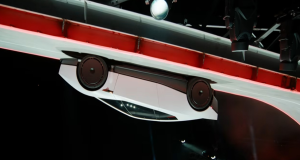
The car also features a suction system that pulls air from beneath the body. Tesla claims this system can generate enough force to hold the car upside down, even when stationary. In Track Mode, the car lowers itself and adjusts its aerodynamic elements to increase down-force.
Tesla has not announced the prices of the three versions or confirmed when production will begin. Details about the battery capacity, motor setup, driving wheels, manufacturing location and initial markets also remain unknown.
Compared with the original 2017 plans, the updated Roadster has a shorter claimed range and fewer seats. Tesla initially promised a range of around 998 km, a top speed above 402 km/h and seating for four. The latest version is advertised with a range of more than 483 km and space for up to two occupants.