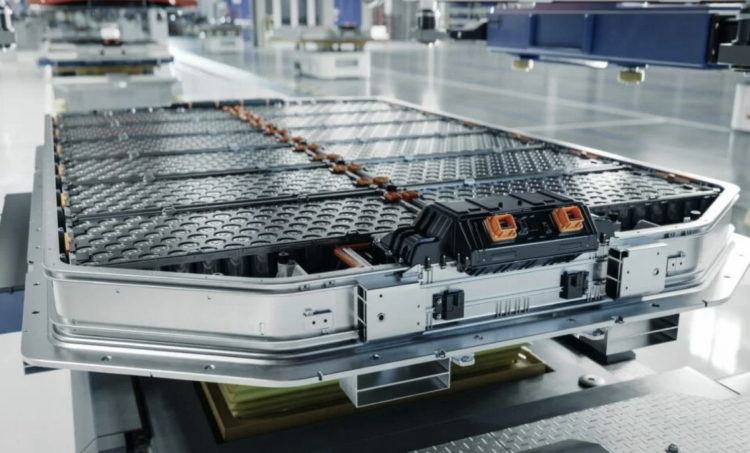
KATHMANDU: China is pushing to establish global standards for solid-state EV batteries as domestic manufacturers expand pilot production and testing according to CarNewsChina.
The International Electrotechnical Commission (IEC) approved a China-led proposal on August 21 for an international standard covering solid-state traction batteries for electric vehicles. China, France, Japan and South Korea are participating in the working group.
The standard-setting process is expected to take 24 to 36 months. It will establish common testing and application requirements for solid-state batteries.
China’s proposed methodology uses a 0.5% mass-loss threshold to identify all-solid-state batteries.
Under the test, a cell is placed in a 120°C vacuum chamber for six hours. Cells losing more than 0.5% of their mass through volatile organic evaporation would not meet the proposed all-solid-state classification.
The rule is important because some batteries marketed as solid-state use semi-solid designs containing liquid electrolyte.
China introduced new battery consumption-tax rules from September 1, 2026. Lithium-ion battery products face a 2% tax, which will rise to 4% from September 2027.
Solid-state batteries, sodium-ion batteries and fuel cells are exempt through December 31, 2028, subject to applicable national-standard requirements.
Sunwoda has completed a dedicated solid-state battery sample production line with a planned annual capacity of 0.2GWh. Its first-generation polymer-based battery has a development target of 400Wh/kg, with vehicle trials targeted for late 2026 and 2027.
EVE Energy has also produced a 60Ah solid-state battery prototype. The company has stated that the EV-focused cell can operate under stack pressure of up to 5MPa.
Several Chinese companies have reported positive results in controlled nail-penetration tests. However, these tests do not establish vehicle-level safety.
Cost remains one of the biggest challenges. Shanghai Metals Market assessed LPSC solid electrolyte at around 4,300 yuan ($605) per kilogram in August, compared with around 30 to 50 yuan per kilogram for liquid electrolyte.
Toyota and Idemitsu Kosan are targeting commercialization of all-solid-state batteries for EVs in 2027-28. Wider automotive deployment is expected to take longer, with Chinese industry forecasts generally pointing to around 2030 or later.
The latest developments show progress in standards, taxation, pilot production and testing, but large-scale all-solid-state EV battery production is still some way off.