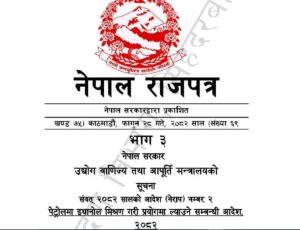
KATHMANDU: The Government of Nepal has issued a new directive allowing petrol to be blended with up to 10 percent ethanol. The policy, titled “Petrol Ethanol Blending and Usage Order 2082”, has been published in the Nepal Gazette by the Ministry of Industry, Commerce and Supplies.
The order aims to promote ethanol production using domestic raw materials, create employment opportunities, and reduce the country’s dependence on imported petroleum products.
According to the directive, ethanol can be produced from several locally available raw materials. These include molasses produced by sugar industries, Napier grass, agricultural and forest biomass waste, straw, corn cobs, wheat husk, and spoiled or inedible grains.
However, the government has placed strict restrictions on the use of food-grade grains for ethanol production in order to protect food security. Any grains suitable for human consumption are prohibited from being used as ethanol feedstock.
To regulate the purchase, sale, and distribution of ethanol, the government has granted exclusive authority to Nepal Oil Corporation. Under the order, licensed ethanol producers must sell their entire production only to the state-owned oil supplier.
Private companies, government agencies, or individuals are not allowed to directly purchase ethanol from producers. Based on availability and technical feasibility, Nepal Oil Corporation will blend up to 10 percent ethanol in petrol before distribution in the market.