KATHMANDU: Nepal has introduced different fees for obtaining and renewing driving licenses after provincial governments began implementing their respective Fiscal Year 2026/27 budget provisions.
While the design, size, quality and validity period of driving licenses remain the same across the country, applicants will now pay different fees depending on the province where they apply.
The changes have been introduced through the Economic Act 2083 enacted by each province.
The fee for issuing and renewing driving licenses is largely uniform across the country. However, application and category addition fees now differ among provinces, creating three different fee structures nationwide.
Until the end of the last fiscal year, applicants paid a standard Rs. 500 application fee across all seven provinces. From July 17, the application fee ranges from Rs. 500 to Rs. 1,000, depending on the province.
Madhesh and Lumbini continue to charge the lowest application fee of Rs. 500, keeping the previous rate unchanged. Sudurpashchim has increased the fee by 50 percent to Rs. 750, while Koshi, Bagmati, Gandaki and Karnali have doubled it to Rs. 1,000.
Category addition fees have also increased. Sudurpashchim has raised the fee by 50 percent to Rs. 750 for all license categories.
In the remaining provinces, adding categories A to F now costs Rs. 1,000, up from Rs. 500. For categories G to J, the fee has doubled from Rs. 1,000 to Rs. 2,000.
New and renewal fees revised
Fees for obtaining a new license and renewing an existing one have also been revised.
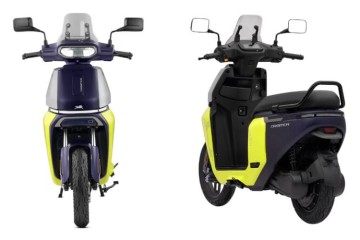
For Category A and K (motorcycles and scooters), the new license and renewal fee has been increased from Rs. 1,500 to Rs. 3,000 across all seven provinces.
For Category B (car, jeep and van), Category E (tractor) and Category F (minibus and mini truck), six provinces now charge Rs. 4,000, while Madhesh Province has set the fee at Rs. 5,000. The fee was Rs. 2,000 nationwide until the end of the previous fiscal year.
For heavy vehicle categories, including Category G (truck, bus and lorry), Category H (road roller and dozer), Category I (crane, fire engine and loader) and Category J (excavator, backhoe loader and similar equipment), six provinces now charge Rs. 6,000 for new licenses and renewals. Madhesh has fixed the fee at Rs. 7,000. Previously, the charge was Rs. 3,000 across the country.
The fee for Category C (tempo and auto-rickshaw) and Category D (power tiller) licenses has also doubled from Rs. 2,000 to Rs. 4,000.
Why license fees differ across provinces
The variation in driving license fees has raised concerns among service seekers, as transport offices across Nepal provide similar services despite charging different rates.
However, officials at the Department of Transport Management say the federal government cannot intervene because the Constitution grants provincial governments exclusive authority to determine vehicle-related taxes and service fees.
Under Schedule 6 of Nepal’s Constitution, provinces have the sole authority to set rates for vehicle taxes, registration fees, service charges, penalties and several other provincial taxes.
“All fees related to vehicles and transport fall under the jurisdiction of provincial governments. The Constitution gives them the authority to determine these charges according to their own policies,” a Department of Transport Management official told MeroAuto. “We have no authority to alter the fees set by the provinces or interfere in their decisions.”
The official, however, added that provincial governments could coordinate among themselves if they choose to introduce a uniform fee structure nationwide.