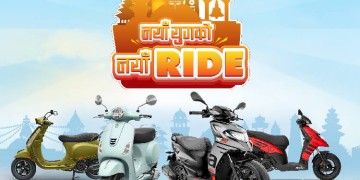
KATHMANDU: What is the first thing that comes to mind when you hear the word Vespa? For most people, the scooter produced by the Italian company Piaggio is the image of a stylish, retro-styled scooter.
Vespa scooters, which are sold in over 100 countries, first entered the Nepali market about 30-35 years ago. Widely recognized as an iconic and successful model in Europe, Asia and North America, the Vespa is often viewed as a status symbol by style-conscious riders.
Primarily favored by the upper-middle and middle classes, Vespas are known for blending vintage aesthetics with modern technology. Despite its heritage design, many models come equipped with ABS and digital dashboards. Electric variants of the Vespa are also available in some international markets.
Vespa’s pricing can feel high for Nepal’s two-wheeler buyers who are largely from lower-middle and middle-income groups.
In India, Vespa scooters are produced with 125cc and 150cc engines. Vespas with both engine options are available in Nepal. Delta Autocorp, the authorized distributor of Vespa, offers models such as the LX, Notte, SXL and VXL with 125cc engines. However, the Vespa with the 150cc engine is available in a single variant—the Vespa VXL 150.
Prices for Vespa scooters in Nepal start at Rs 301,946 for the base variant and go up to Rs 406,446 for the top-end VXL 150 variant. Vespa scooters compete directly with brands like scooters made by TVS, Honda, Yamaha and Suzuki. However, Vespa’s Italian heritage and distinctive design set it apart from other brands in the market.
Since Vespa scooters sold in Nepal are primarily imported from India, the availability of spare parts and servicing is relatively good. However, Vespa’s pricing can feel high for Nepal’s two-wheeler buyers who are largely from lower-middle and middle-income groups. High upfront cost and relatively higher maintenance and parts costs compared to other brands often push consumers toward more budget-friendly options.