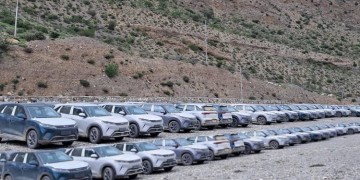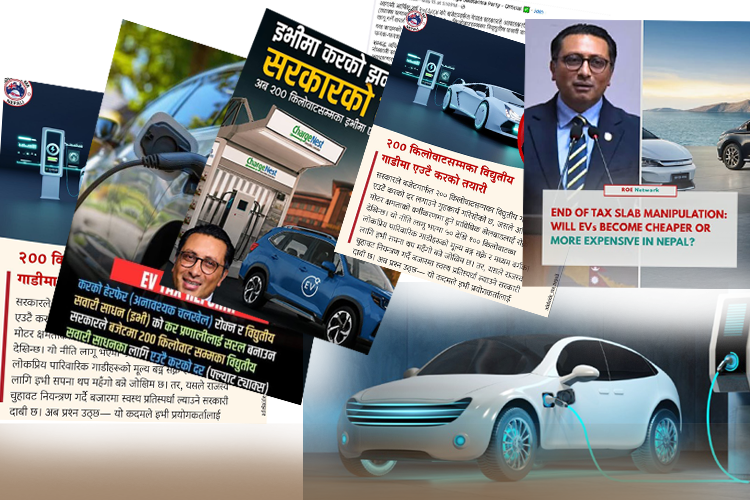
KATHMANDU: Discussions about possible tax changes on electric vehicles have started creating confusion in Nepal’s automobile market ahead of the upcoming budget announcement.
In recent days, reports and rumors about EV taxes have been spreading on social media and in the media. Some reports claim the government may change the current tax system for EVs, while others suggest taxes could increase. This has left both customers and vehicle importers uncertain.
Any change in EV taxes directly affects vehicle prices. If taxes go up, customers will have to pay more. If taxes are reduced, prices may become more affordable.
At present, Nepal charges EV taxes based on motor power. Vehicles are grouped under different categories such as 50 kW, 100 kW, and 200 kW. However, discussions are ongoing about introducing a single tax rate for EVs with motors up to 200 kW.
The possible change has started a debate in the automobile sector. Many people believe the current system is not practical for Nepal because roads in hilly and Himalayan areas often require more powerful vehicles. Higher-powered EVs are currently taxed more heavily.
Some industry voices say vehicle taxes should be based on real usage and road conditions instead of only motor power.
There are also concerns that some companies may show lower motor power figures to reduce taxes. Stakeholders have asked the government to introduce better testing and monitoring systems to stop such practices.
Officials at the Ministry of Finance have not officially confirmed any EV tax changes yet. However, discussions are expected to continue until the new budget is announced later this month.