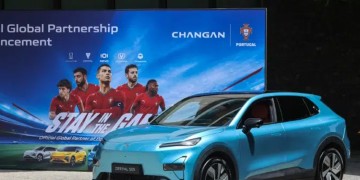
KATHMANDU: The global automotive industry is preparing to play a key role in the FIFA World Cup 2026, not just as sponsors but as technology and mobility partners. With matches set across the United States, Canada, and Mexico, the tournament is expected to showcase next-generation automotive solutions.
Automakers and mobility companies are focusing on fleet management, AI-driven logistics, and digital user experiences to support one of the world’s largest sporting events.
Large-scale transportation will be critical during the tournament. Industry players are expected to deploy electric and connected vehicle fleets for team movement, VIP transport, and fan mobility.

Smart logistics platforms will help manage real-time traffic, optimize routes, and reduce congestion across host cities. Fleet operators are likely to integrate telematics, predictive maintenance, and centralized control systems to ensure smooth operations. This approach will also support lower emissions, with many fleets expected to include electric and hybrid vehicles.
Robotics and artificial intelligence are set to play a growing role in event operations. Autonomous delivery vehicles and AI-powered service robots may be deployed within stadium zones for logistics, security, and fan assistance.

Companies investing in self-driving technology will use the tournament as a testing ground for controlled urban mobility solutions. AI systems will also support traffic analysis, crowd movement prediction, and safety monitoring.
The event will also serve as a platform for automakers to showcase advanced in-car technologies. Digital cockpits with large displays, voice assistants, and connected services will be highlighted as part of the fan experience.
Brands are expected to launch immersive marketing campaigns using augmented reality (AR), virtual reality (VR), and interactive displays. Visitors can experience virtual test drives, explore vehicle features digitally, and engage with brands beyond traditional showrooms. Data-driven tools will further enable personalized customer engagement.

For Nepali football fans, the tournament will mostly be a late-night and early-morning event due to the time difference. The opening match is scheduled for 12:45 AM NST on June 12.
The tournament begins at Estadio Azteca in Mexico City, one of the world’s most iconic football stadiums, highlighting the scale of mobility and transport systems required for a global event.
As the tournament is jointly hosted by Canada, Mexico, and the United States, most matches will be broadcast in Nepal between 12:45 AM and 9:00 AM NST. The final is set to take place on July 19 at MetLife Stadium, USA.