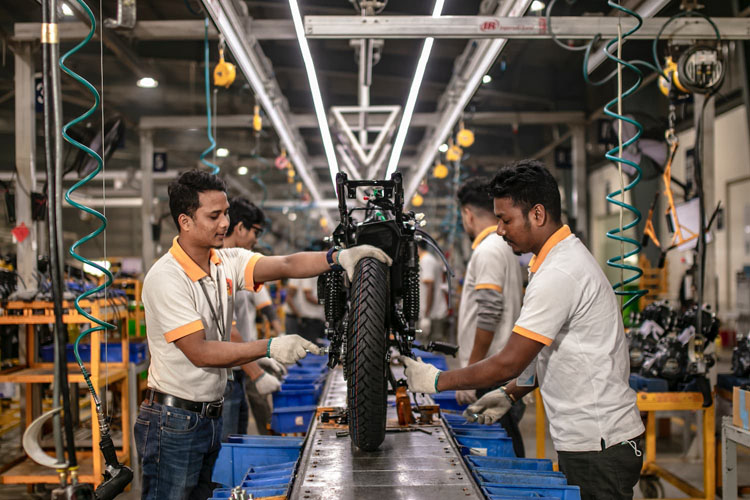
KATHMANDU: Nepal’s automobile industry has reached a new stage. Until a few years ago, the market was completely dependent on imported vehicles. Today, assembly plants for motorcycles and four-wheelers are operating in the country. This is an encouraging beginning for Nepal’s automotive industrialization.
However, the discussion should no longer focus only on the establishment of assembly plants. The bigger question is: Are these industries creating a genuine manufacturing base in Nepal, or simply assembling imported parts to benefit from tax concessions?
The experience of automobile-producing countries around the world shows that assembly is only the first phase of industrialization. It is never the final destination. Instead, it serves as the foundation for developing a manufacturing industry.
Countries such as South Korea, China, India, Thailand and Indonesia also started with vehicle assembly. Over time, they introduced clear timelines to increase local production. They prioritized local component manufacturing, technology transfer, domestic supply chains and exports. As a result, they have become major automobile production hubs.

Nepal now has both the opportunity and the need to follow a similar path. The government has introduced policy provisions and tax incentives to encourage assembly. But these concessions should not be viewed as permanent benefits. They are meant to help industries gradually transition into full-scale manufacturing.
The motorcycle assembly sector expanded rapidly after the government introduced special tax concessions through the fiscal year 2022/23 budget. Several international motorcycle brands established assembly facilities in Nepal. In the passenger vehicle segment, Hyundai opened the country’s first modern four-wheeler assembly plant, encouraging other brands to consider similar investments.
However, policy uncertainty and the absence of a long-term roadmap have kept many potential investors in a wait-and-watch position.
In 2021, the government introduced a policy requiring motorcycle assembly industries to achieve at least 10 percent local value addition in the first year and 30 percent within five years.
The policy also required minimum employment generation and the use of locally produced materials. However, these conditions have not been effectively monitored. As a result, many industries have continued receiving tax benefits without making significant progress toward localization.
The Office of the Auditor General has also questioned the government’s approach.
In its 63rd Annual Report, the Auditor General stated that customs offices undercollected government revenue worth Rs 7.49 billion after granting tax concessions to assembly industries without completing the required procedures.
A Question that demands answers: “What do tax exemptions actually deliver?”
If an industry continues importing almost all of its components from overseas and only assembles them inside Nepal, can it truly be considered a manufacturing industry?
Tax incentives are intended to generate employment, reduce foreign currency outflow, promote local industries and support technology transfer. If these objectives are not being achieved, both the government and the private sector must explain the actual benefits delivered through these concessions.
Value addition is not simply about tightening screws or increasing percentages by adding labor costs. It means using locally produced materials, sourcing components from Nepali manufacturers, developing engineering capabilities, strengthening testing and quality control, and gradually expanding the manufacturing process inside the country.
Many automotive components can already be produced in Nepal, and some are already being manufactured.
These include batteries, tires, wiring harnesses, seats, plastic components, glass, rubber parts, metal brackets, fasteners and EV charging cables. Despite this potential, companies have shown limited interest in increasing the use of locally manufactured components.
Greater localization would help develop dozens of supporting industries alongside the automobile sector. That is where true industrialization begins.
The government’s role should not end with providing tax exemptions. Every incentive must be linked to measurable performance.
Independent technical audits should be conducted annually to verify whether industries have achieved their localization targets. Companies meeting their commitments should receive additional incentives, while concessions for those failing to meet targets should gradually be reduced. Such a system would also encourage healthy competition within the industry.
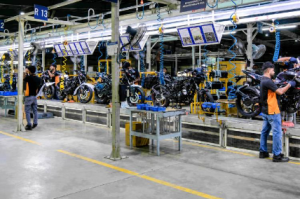
A similar roadmap is urgently needed for Nepal’s four-wheeler sector.
More than two years have passed since Hyundai’s assembly plant began operation. The government should now introduce a clear five, 10 and 15-year value-addition roadmap for the passenger vehicle industry.
The plan should define which components will be manufactured locally, when domestic suppliers will be developed, and how Nepal will gradually build an export-oriented production base.
Policy stability is equally important.
Companies investing billions of rupees in automobile manufacturing require certainty over taxation, localization requirements and government policy for at least a decade. Long-term industrial investment is difficult in an environment where policies change every year.
The debate is no longer about whether Nepal needs assembly industries. The focus should now be on transforming assembly into genuine manufacturing.
Tax concessions should be treated as performance-based incentives rather than permanent privileges. Policies must prioritize local supply chains, technology transfer and export-oriented production.
If the government introduces a clear roadmap with measurable value-addition targets, Nepal can move beyond being only a vehicle market. Over time, it can also establish itself as a regional hub for automotive component manufacturing and supply chains.
To achieve that goal, industries must move beyond seeking incentives alone, while the government must move beyond simply providing them. The priority now should be real production, stronger competitiveness and meaningful value addition.