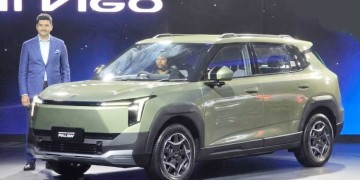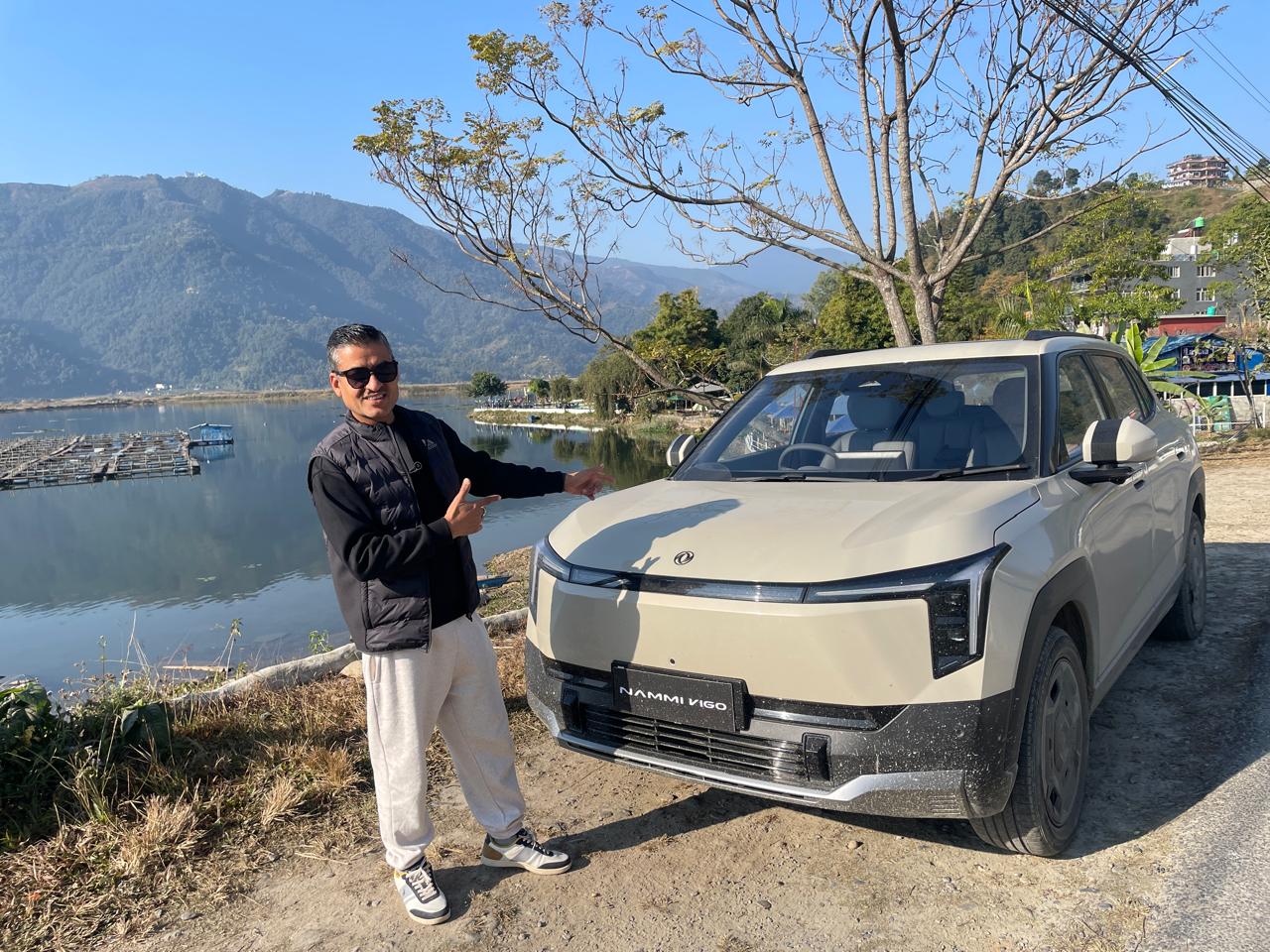
KATHMANDU: The Nammi Vigo has emerged as the lowest-priced compact electric SUV in the Nepali market. Introduced at the NADA Auto Show 2025, the model is now increasingly visible on roads across the country, reflecting growing interest from buyers.
Previously, I had driven the Nammi Vigo around the Kathmandu Valley. As a compact SUV, it was easy to drive in urban areas. However, since I planned a longer drive, I decided to take it outside the valley.
Many sellers emphasize range figures when testing an electric car. Test drivers are often encouraged to focus only on maximizing range. However, driving with this mindset makes it difficult to understand the vehicle’s real condition. Driving comfort, braking, and body stability often get overlooked.
I drove the Nammi Vigo on the Kathmandu–Pokhara route, and returned to Kathmandu via Nuwakot. This time, my focus was on overall vehicle performance. Range was a secondary concern.
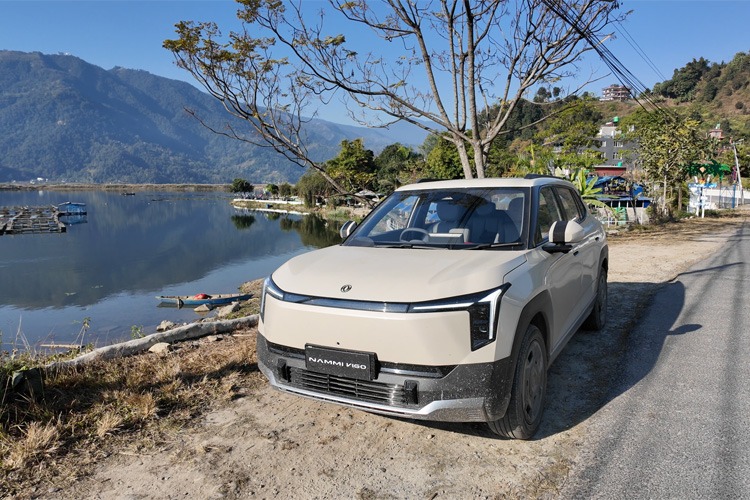
The route from Sitapaila, Kathmandu to Ambukhaireni via Dharake and Galchi is familiar to most drivers. However, the Galchi–Kurintar section is in very poor condition. Ongoing road expansion work has made the drive uncomfortable, and in its current state, it cannot be considered a proper highway.
This route was useful to test the vehicle on pothole-filled roads. Meanwhile, the Aanbukhaireni–Pokhara section, built to Asian highway standards, allowed proper highway driving. To test steep uphill performance on the return, I chose the Chhahare–Tokha route.
After driving around 450 kilometers in two days, here are the strengths and weaknesses of the Nammi Vigo.
Strengths
Range
I did not drive the car with the intention of maximizing range. In the past as well, range has not been the top priority during many MeroAuto.com test drives. The range achieved here reflects what normal users can expect in real-world conditions.
The car consumed 48 percent charge while traveling 216 kilometers from Thali, Kathmandu to Pokhara in around 6 hours. With colder weather setting in, we used the heater from Kathmandu to Damauli. After Damauli, we used the AC. Even then, the car consumed only 48 percent charge for this distance, which is very good.
On the return trip from Pokhara, the car consumed 61 percent of its charge. From Pokhara to Battar in Nuwakot, it used 40 percent, and from Battar to Naxal in Kathmandu, it used 21 percent.
Overall, the Kathmandu–Pokhara round trip was completed using 109 percent total charge, which is an excellent result.
The Nammi Vigo sold in Nepal is available with two battery options. The smaller battery is 44.9 kWh, while the larger one is 51.87 kWh.
Braking and acceleration
The Nammi Vigo offers very smooth acceleration. EVs usually deliver instant torque, which can feel jerky for passengers. That is not the case with the Vigo. Acceleration is well controlled. Braking performance is also confident and precise.
ADAS features like lane keep assist, adaptive cruise control, and a 360-degree camera are very useful on the road. These features help the driver and provide timely alerts.
Power
The Nammi Vigo is powered by a 99 kW electric motor with front-wheel drive. It feels strong and responsive. It offers three driving modes: Eco, Comfort, and Sport.
Eco mode is sufficient even for highway driving. It feels more powerful than Eco modes in many other SUVs. Comfort and Sport modes feel even stronger. This may be due to the Vigo’s relatively low curb weight of 1,630 kg.
Exterior design
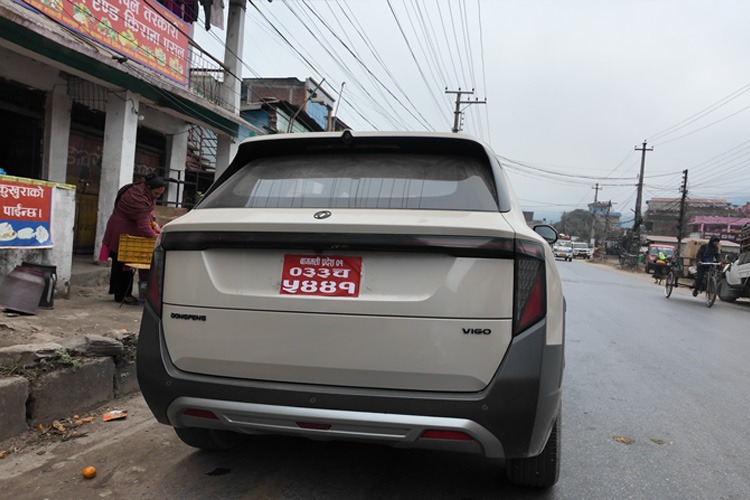
The Nammi Vigo looks more attractive than many SUVs in the market. Its boxy design, clean finish, unique door handles, new tailgate design, stylish wheel arches, and thick body cladding give it a distinctive appearance.
Price
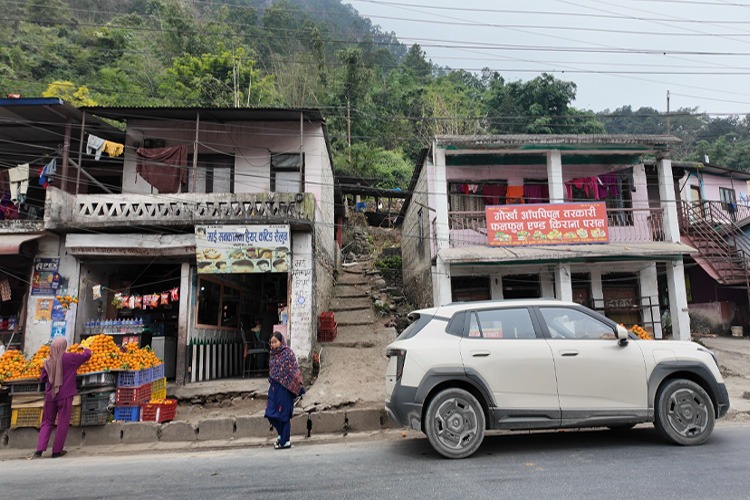
The Nammi Vigo is offered with two battery variants in Nepal. The Vigo E2 comes with a 44.94 kWh battery and is priced at Rs 3.899 million, while the higher-spec Vigo E2 Plus features a larger 51.87 kWh battery and costs Rs 4.199 million.
Built on a pure EV platform, the Nammi Vigo is currently the lowest-priced compact electric SUV available in the Nepali market.
Weaknesses
The Nammi Vigo is not a fully feature-loaded model. The dashboard design could have been better. There is a large empty space between the center console and the dashboard. This area could have been designed in a more modern way. Slight cabin rattling is noticeable on rough roads.
If these minor issues are overlooked, the Nammi Vigo stands out as one of the best value-for-money compact electric SUVs currently available in the Nepali market.