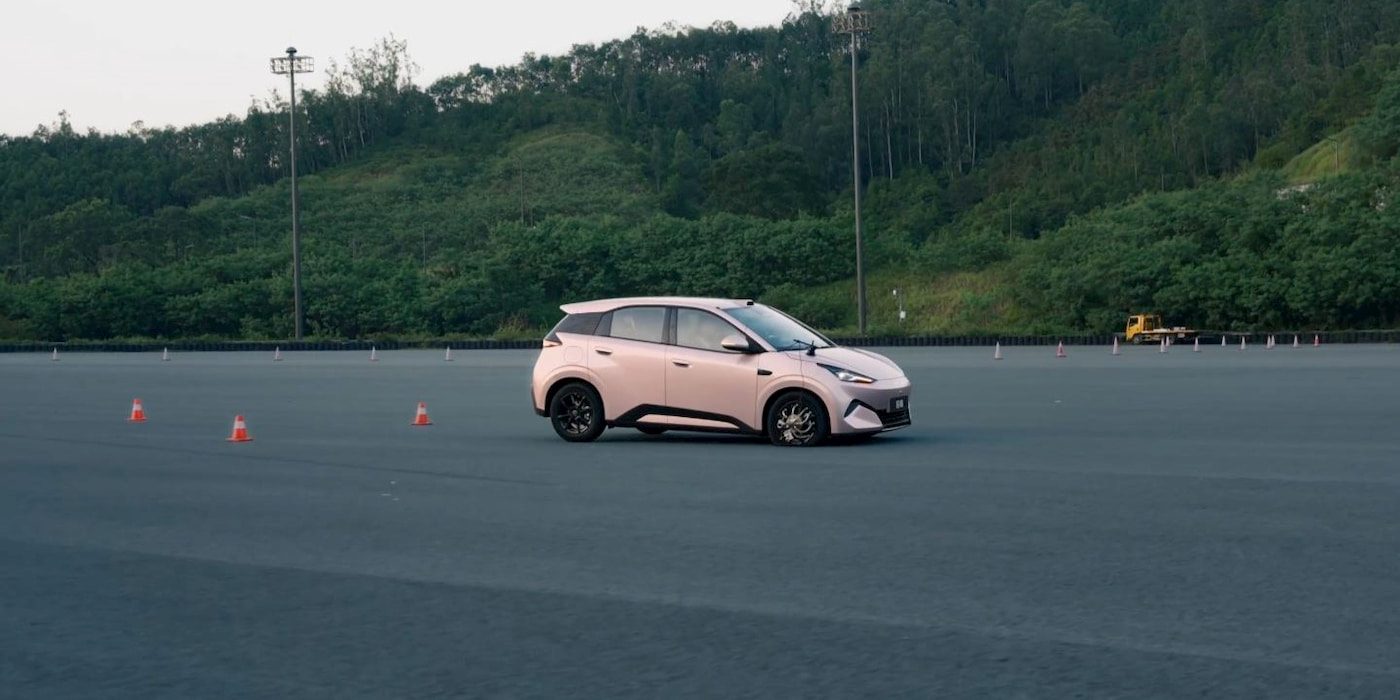
KATHMANDU: The second-generation BYD Seagull electric hatchback has completed a tire blowout test at 140 km/h in China, demonstrating its ability to remain stable after a sudden loss of tire pressure.
In a video shared by Zhang Zhuo, general manager of BYD’s Ocean series, the car accelerates to 140 km/h before a device punctures its front-right tire at multiple points. Despite the rapid loss of air pressure, the vehicle remains stable, slows down safely and stays on its intended path.
The test highlights the stability control technology available in the new Seagull, an affordable electric car priced from USD 9,880 in China.
Advanced stability systems designed to handle sudden tire failures have generally been associated with more expensive electric vehicles and plug-in hybrids.

The second-generation Seagull also offers BYD’s God’s Eye (DiPilot 300) assisted-driving system with LiDAR. The system supports assisted parking and Navigate on Autopilot (NOA) functions on urban roads and highways in China. Drivers must continue to monitor the road and remain responsible for the vehicle.
The new BYD Seagull measures 4,205 mm in length, 1,810 mm in width and 1,570 mm in height, with a wheelbase of 2,650 mm. It is 425 mm longer than the first-generation model, which is sold in some markets as the Dolphin Mini, Dolphin Surf or Atto 1.
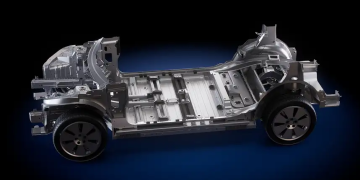
The electric hatchback uses a rear-wheel-drive layout and is available with two motor options producing 85 kW (114 hp) and 95 kW (127 hp).
It comes with two lithium iron phosphate (LFP) battery options of 30.1 kWh and 39.2 kWh, offering a claimed CLTC range of 320 km to 420 km. The car also supports BYD’s flash-charging technology, which can charge the battery from 10% to 97% in nine minutes under the specified conditions.
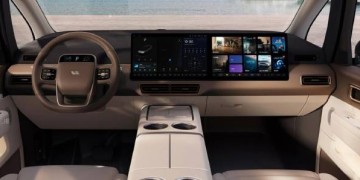
Inside, the Seagull features a 15.6-inch display that also serves as the instrument panel, a 50W wireless phone charger, 127-color ambient lighting and an eight-speaker audio system. Other features include a 94-liter front trunk and a massage function for the driver’s seat.