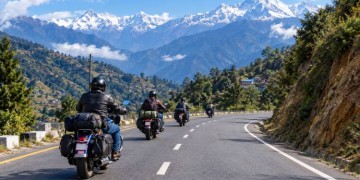
Motorcycle touring in Nepal is a dream for riders around the world. Nestled between China in the north and India in the south, this Himalayan country offers a rare mix of adventure, culture, and natural beauty.
Home to eight of the world’s ten tallest mountains, Nepal delivers breathtaking rides through diverse landscapes, from humid southern plains to cold, rugged Himalayan trails.
The charm of riding in Nepal lies in its contrasts. Within a few hours, you can go from fertile lowlands to misty hills or High Mountain passes. Smooth highways, winding forest roads, and dusty off-road tracks make every route both thrilling and scenic.
Beyond the terrain, it’s the people that make the difference. Stop at a roadside tea stall and you’ll be met with warm smiles and stories, small gestures that turn every ride into a memorable journey.
Nepal’s compact geography allows riders to explore at a relaxed pace. Expanding road networks now connect major cities with remote valleys, bringing bikers closer to the Himalayas and Nepal’s cultural heartlands.
A motorbike tour here is more than just a ride, it’s a journey through living heritage, mountain spirit, and natural wonder.

From long, smooth highways across national parks to challenging off-road trails that climb toward snow-capped peaks, Nepal has something for every rider. Whether you seek adrenaline or tranquility, the open roads of Nepal offer it all.
I identified Nepal’s Top Ten Two-Wheel Touring Destinations in his study “Role of Two-Wheel Touring in the Nepalese Tourism Sector.” Based on surveys with riders, clubs, and travel agencies, his research highlights Nepal’s regional diversity and rising potential in motorcycle tourism across all seven provinces.
This series, “Discover Nepal on Two Wheels,” begins with Khotang–Halesi Mahadev, the first featured route in the guide. Together, these journeys invite riders to experience Nepal as it truly is free, adventurous, and deeply connected to its land and people.
Khotang – Halesi Mahadev: Ride to the cave of the Gods
For riders seeking both adventure and spirituality, Halesi Mahadev in Khotang offers one of Nepal’s most rewarding motorcycle routes. Often called the Pashupatinath of the East, this sacred cave temple is revered by Hindus, Buddhists, and Kiratis, making it a unique crossroads of culture, faith, and nature.
Situated between the Dudh Koshi and Sun Koshi rivers, Halesi Mahadev lies inside a mystical cave that houses a two-foot Shiva Linga. Devotees believe visiting the site cleanses sins and brings peace, knowledge, and wisdom. Hindus worship Halesi as Devadidev, the God of all gods; Buddhists regard it as one of six sacred sites linked to Guru Rinpoche (Padmasambhava); while the Kirati community sees it as the birthplace of their ancestral religion.
The ride from Kathmandu to Halesi covers about 220 km, following the route Dhulikhel → Nepalthok → Khurkot → Ghurmi → Okhaldhunga → Jayaram → Halesi.

The journey offers a mix of smooth highways and narrow hill roads, providing both challenge and excitement. Riders from Itahari (248 km) and Janakpur (211 km) also travel this way, connecting through Inaruwa, Mirchaiya, Betini, and Ghurmi before reaching the hill sections.
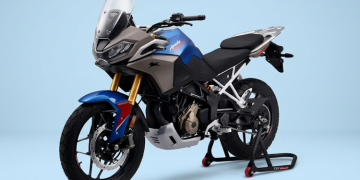
The trip takes around two days, reaching a maximum altitude of 3,100 meters. Roads are moderate and suitable for touring or dual-sport bikes. Along the way, riders can stop at small towns, tea stalls, and scenic viewpoints overlooking terraced fields and river valleys. Basic lodges and hotels are available near the temple for overnight stays.

The journey to Halesi Mahadev can be started from different parts of Nepal. From Kathmandu, the distance is around 220 kilometers, which usually takes about two days to complete, offering a balanced mix of highways and hilly roads.
Riders coming from Itahari in the eastern plains cover roughly 248 kilometers, while those starting from Janakpur travel about 211 kilometers, both taking around two days as well.
Riders should check weather and road conditions before starting the trip. The best season to ride is October to April, when roads are dry and visibility is clear. Fuel stations are limited after Okhaldhunga, so refueling early is important. Carrying basic repair tools, warm gear, and essentials is also recommended, as temperatures drop with altitude.
Writer Shrestha is a tourism expert.