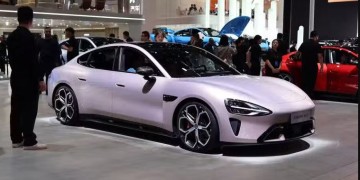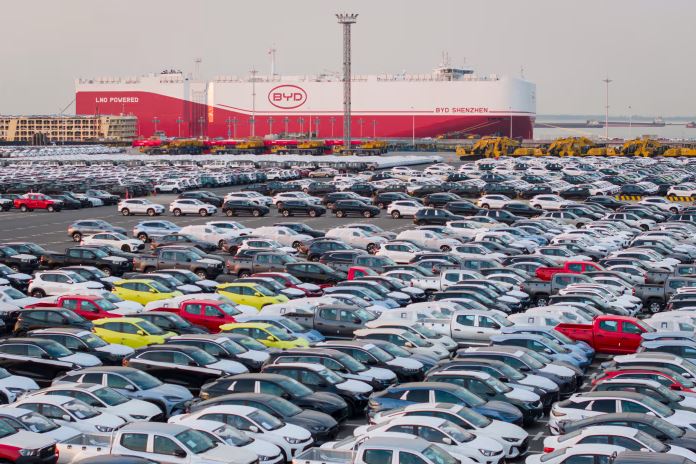
KATHMANDU: China strengthened its dominance in the electric vehicle (EV) market in 2025, with local brands taking nearly two-thirds of the passenger-car market and pushing many foreign automakers into survival mode, writes The Wall Street Journal.
Nearly 13 million electric vehicles and plug-in hybrids were sold in China last year, accounting for 54 percent of total passenger-car sales. The growth largely benefited Chinese manufacturers such as BYD and Geely, helping domestic brands expand their overall market share.
EV and plug-in hybrid sales in China rose 18 percent in 2025, contrasting with slower adoption in the United States and Europe. Industry data from the China Passenger Car Association (CPCA) shows Chinese automakers remain ahead in intelligent vehicle features and faster product updates.
Pure electric vehicle sales reached 7.9 million units, around six times higher than estimated U.S. EV sales of about 1.3 million units in 2025.
Foreign automakers continued to lose ground. Tesla’s China sales fell nearly 5 percent to about 626,000 units, while the company also lost its global EV sales lead to BYD. Volkswagen and General Motors announced plant closures and restructuring, with GM expecting $1.1 billion in charges related to its China operations.
Despite the pressure, some foreign brands are adapting. Volkswagen plans to launch China-developed models, Toyota is building a Lexus EV plant in Shanghai, and GM said all new China-bound products this year will include EV or plug-in hybrid options.
Competition remains intense, with widespread price cuts. Only 30 percent of car dealers were profitable in the first half of 2025, according to dealer association data.
Government incentives supported demand, with trade-in subsidies reaching up to $2,900 per vehicle. Around 11.5 million vehicles were purchased under the program last year. However, reduced subsidies and exhausted local budgets led to a 14 percent year-on-year drop in December sales.
Overall, China’s passenger-car market grew 4 percent in 2025 to 23.7 million units, marking its slowest growth in three years, even as electric vehicles continued to reshape the market.