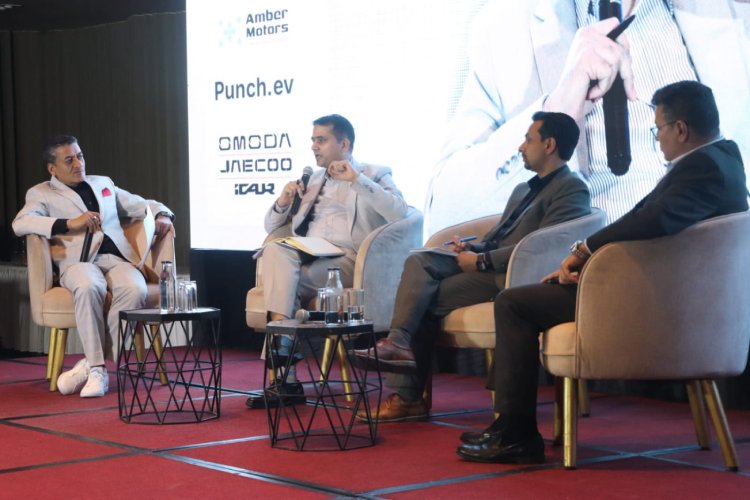
KATHMANDU: Automobile stakeholders have stressed the need for a stable and long-term policy framework to support the growth of Nepal’s auto sector. The views were shared during a panel discussion titled ‘Nepal Auto Sector Outlook: Role of Banking, Investment and Regulatory’ organized by MeroAuto on Friday.
Rajan Babu Shrestha, CEO of Sipradi Trading, said the sector is facing challenges due to outdated laws and the lack of timely revisions. He emphasized that frequent changes in tax rates through annual budgets create uncertainty and discourage investment.
“There is no stable government policy for the auto sector. Tax rates change every year, which does not guarantee investment. Industrial growth requires long-term policy stability. At least a 5-10 year policy framework is necessary,” he said.
Shrestha added that the private sector is ready to invest if the government provides a clear roadmap. He noted that Nepal has already started vehicle assembly and is gradually moving towards full-scale domestic production.
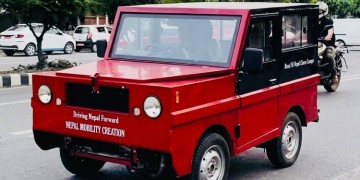
Under the ‘Made in Nepal’ concept, Sipradi is working on two-wheeler development, including design and production within the country. However, he highlighted that localization is not possible without a proper component manufacturing ecosystem. He also stressed the need for policies that expand the market to support assembly industries.
He pointed out that the size of the auto sector has not grown significantly over the past 8-9 years and urged the government to view automobiles as a necessity rather than a luxury. Increased investment in infrastructure and collaboration with stakeholders during policy formulation were also highlighted as key requirements.
Mahesh Bhattarai, Joint Secretary at the Ministry of Finance, said the auto sector should be viewed broadly due to its contribution to revenue, employment, financial market development, and technology transfer.
He noted that while vehicle assembly has started in Nepal, full-scale manufacturing will take time. “We need to gradually build capabilities, including tire and spare parts production. This will help in job creation, value addition, localization, and integration into global value chains,” he said.
Bhattarai added that although assembly operations may not be profitable initially, both the government and private sector need to make short-term sacrifices for long-term gains. He also noted that government incentives must be justified through increased local input.
He reiterated that the government has been supporting industrialization but is limited by available resources. He said recent efforts have been made to maintain political stability.
“In the current fiscal year, we kept tax rates unchanged, despite expectations of a 15-20 percent increase. The government will not introduce policies in a ‘black box’ manner going forward,” he said.
He also urged the private sector to clearly communicate policy needs instead of only seeking incentives. According to him, the government does not view automobiles as a luxury segment, and any gaps among regulators, the central bank, and the private sector should be addressed collectively.
Subhash Chandra Ghimire, Director at Nepal Rastra Bank’s Bank Supervision Department, said the central bank adjusts policies based on risk assessment. These include factors such as import controls, risk weight, loan defaults, and recovery ratios.
He explained that the initial flexible policies for electric vehicles (EVs) were introduced to promote adoption. However, as the market is still evolving, some tightening has been implemented.
“The loan-to-value ratio remained unchanged from FY 2019 to 2024, with 80 percent for EVs and 50 percent for ICE vehicles. It has now been revised to 60 percent for both. This reflects risks related to rapid technological changes, depreciation, and resale value,” he said.
Ghimire stated that there is currently no major issue in auto financing. He added that the central bank continues to expand priority sectors and may include the auto sector in the future based on government direction.
He also noted that refinance policies for EVs have not yet been introduced due to existing risks. “Nepal’s EV ecosystem is still developing. Challenges such as after-sales service, price fluctuations due to technology changes, and uncertain resale value remain. Policy support like refinancing can be considered once the ecosystem matures,” he said.