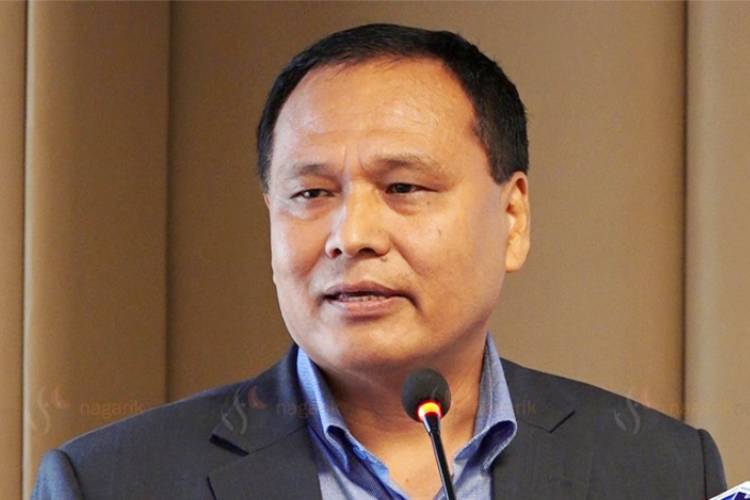
KATHMANDU: Kulman Ghising, the Chairman of the Ujyaalo Nepal Party and former Energy Minister, has stated that the government discouraged the use of electric vehicles through the budget.
He wrote a status on the social media platform Facebook. He said that the tax policy in the upcoming fiscal year’s budget shows a clear sign of discouraging the use and expansion of electric vehicles instead of promoting them.
According to him, this policy goes against national goals. These goals include increasing the consumption of domestically produced clean green energy, reducing the import of petroleum products, and developing an eco-friendly transport system.
“The tax policy adopted by the government through the budget for the fiscal year 2026/27 gives a clear signal of discouraging the use and expansion of electric vehicles instead of promoting them. This policy appears contrary to the national goals of increasing the consumption of domestically produced clean green energy, reducing the import of petroleum products, and developing an environment-friendly transport system,” he stated.
He mentioned that the tax imposed on EVs through the new budget has been brought on par with petroleum vehicles. Here is Ghising’s reaction regarding the increased taxes on EVs in the budget:
Through the budget for the upcoming fiscal year, the government has decided to levy a 5 percent Value Added Tax (VAT) on consumers who consume more than 50 units of electricity per month. This decision is against the welfare of general consumers. It also goes against the goal of energy transition and the national campaign to increase the use of domestically produced clean energy.
As electricity access expands in Nepal, its use for household purposes is increasing. This is a time to encourage the use of electricity for cooking, heating water, and other domestic purposes. Instead, the government seems to be trying to punish consumers by adding an extra tax burden. Most consumers who consume more than 50 units per month are ordinary household users.
Under such circumstances, the decision to impose a tax will increase the monthly expenses of millions of families. It will make the kitchen even more expensive. The government should have brought promotional policies to increase the consumption of electricity produced within the country.
Instead, it took a step that discourages the use of electricity. This could reduce the use of equipment like electric stoves. It may increase dependence on LP gas again. This does not align with the goals of national energy security, trade deficit reduction, and building a green economy.
Increasing the internal consumption of electricity is the need of the hour. For that, electricity tariffs should be made more justifiable, progressive, and consumer-friendly. A new tax burden should not be added.
Therefore, for the utilization of domestic electricity, promotion of clean green energy, and the welfare of general consumers, I strongly demand the government to immediately withdraw this additional 5 percent tax imposed on electricity consumers.