KATHMANDU: The government’s implementation of the Nepal Vehicle Emission Standards, 2082, effective from July 9, is set to increase vehicle prices in the Nepali market.
Under the new regulation, Euro 5 emission standards are mandatory for two-wheelers, while four-wheelers must comply with Euro 6. As a result of this policy, prices of motorcycles, especially in the commuter segment are expected to rise.
Most two-wheeler distributors had been importing commuter motorcycles based on BS4 standards. However, with the government now allowing only vehicles equivalent to Euro 6 or BS6 standards, an increase in motorcycle prices appears inevitable.
Following requests from dealers, the government allowed a one-time clearance for Euro 4 vehicles with already-issued proforma invoices until December 1. Because of this provision, some companies still have BS4 motorcycles in stock. Dealers say these stocks are gradually running out, and all new two-wheelers entering the market will now be Euro 6 compliant.
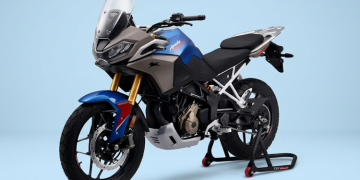
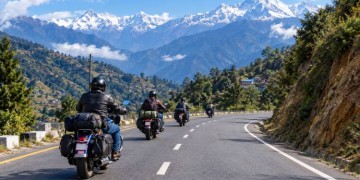
Last month, Royal Enfield introduced two BS6 compliant motorcycle models in Nepal, upgrading previously available BS4 models with new engines. Similarly, Bajaj opened bookings for the BS6 version of the Pulsar 220F as soon as the 2026 began.
Dealers say motorcycles with BS6 engines will be more expensive, as they come with additional features and newer technology compared to BS4 models. When India adopted new emission standards, vehicle prices rose by around 10 percent.
Under BS6 rules, motorcycles and scooters must use fuel-injection (FI) engines. In addition, technologies such as ABS and advanced emission-control systems are mandatory, further adding to costs.
Bajaj Nepal Director Abhimanyu Golchha says prices may rise for certain models once BS6 becomes compulsory.
“Price increases will vary by model,” he said. “Our larger motorcycles were already BS6 compliant, so their prices will not change. However, motorcycles in the 150cc to 200cc segment could become more expensive by Rs 15,000 to Rs 30,000 when they shift to the new engines.”
Golchha added that models already equipped with ABS and FI engines may not see significant price hikes when upgraded to BS6.
Royal Enfield Nepal Director Meghraj Poudel shares a similar view. Calling BS6 a costly technology, he said, “We have introduced BS6 engines along with additional features, but we have not increased prices significantly. Still, moving to BS6 can result in a price rise of Rs 25,000 to Rs 30,000.”
He added that current market conditions do not favor sharp price hikes. “Instead, we are coordinating with manufacturers to bring motorcycles to the market at the lowest possible price,” Poudel told MeroAuto.
Akheel Gupta, Director of Jagdamba Motors, the authorized distributor of TVS motorcycles in Nepal said motorcycles under the new standard could become 8 to 15 percent more expensive.
“Manufacturers are likely to increase prices by 4 to 15 percent. In Nepal, the impact could be around 8 to 15 percent,” Gupta told MeroAuto.
Currently, most motorcycle companies in Nepal are in the final stage of shifting their entire lineup to BS6. This transition is expected to increase prices by around Rs 15,000 for small motorcycles and up to Rs 30,000 for mid-size models entering the market with BS6 engines.