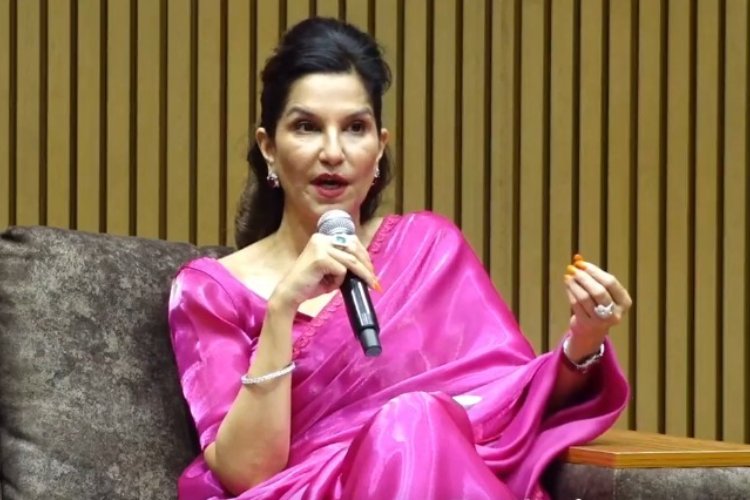
KATHMANDU : Ritu Singh Vaidya, President of the Nepal Automobile Importers and Manufacturers Association (NAIMA), has said a lack of trust between the government and private sector is becoming a major challenge for investment in Nepal.
Speaking at the NAIMA Mobility Dialogue organized by NAIMA on Tuesday, Vaidya said the government and private sector must build mutual trust to encourage investment and economic growth.
She also called for a clear distinction between financial offenses and criminal cases. According to her, a lack of legal clarity and protection has increased fear and uncertainty among investors.
“The situation has developed in such a way that the biggest challenge at present is the lack of trust. The government does not fully trust the private sector, and the private sector also lacks confidence in the government.” Vaidya said. “We do not trust the policies, and the policies also do not appear to be designed to encourage the private sector. Instead of viewing investors with suspicion, we need to develop a culture of welcoming them.”
Vaidya said Nepal should focus on sectors where it has a clear comparative advantage rather than trying to develop large-scale industries across multiple sectors.
She pointed to information technology, tourism, high-value agricultural products and innovative industries based on hydropower as areas with strong potential.
“Instead of focusing on areas where we have to compete on cost and distance, we should focus on sectors where these factors matter less,” she said. “We are developing a capable workforce for the IT sector. Young people can become entrepreneurs instead of only looking for jobs.”
Vaidya also highlighted tourism as an important source of foreign income and employment. She said private investment in tourism infrastructure could create jobs on a large scale while bringing more money into the country.
She urged Nepal to explore high-value agricultural products instead of focusing only on traditional crops.
“We should think beyond rice and millet and explore crops such as figs and almonds,” she said, citing the example of farmers who have moved into high-value nut farming in other parts of the world.
Vaidya said Nepal should focus on increasing domestic electricity use instead of relying mainly on power exports to neighboring countries. She called for the adoption of new technologies to boost local energy consumption.
“Instead of selling only electricity to neighboring countries, we should adopt technologies such as green hydrogen and ammonia,” she said. “These can help decarbonise industries such as cement and steel. Rather than relying only on electricity exports, we should use more electricity domestically and reduce our dependence on imports.”
Vaidya also stressed the need to attract foreign direct investment (FDI) by improving the investment environment. She said FDI brings not only capital but also international knowledge, technology and new opportunities for development.
According to Vaidya, Nepal must first strengthen confidence among domestic investors to attract foreign investors.
She urged the government to make policies and regulations more investment-friendly. She warned that continued delays in policy reforms could weaken investor confidence and eventually have a negative impact on the economy.