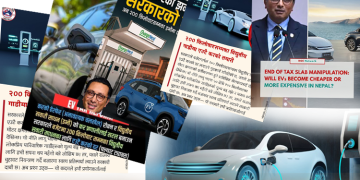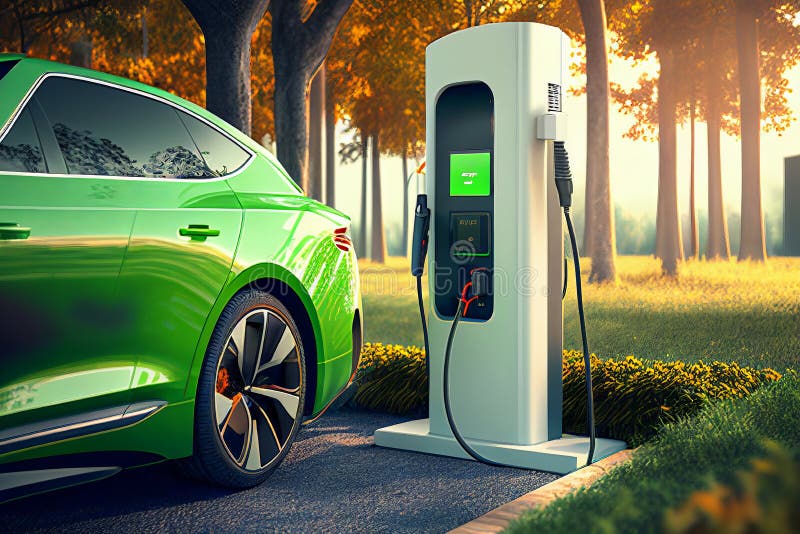
KATHMANDU: Finance Minister is set to unveil Nepal’s federal budget for fiscal year 2026/27 (2083/84) tomorrow. Ahead of the announcement, discussions around possible changes in electric vehicle taxation have intensified across the auto industry.
One of the major proposals being discussed is a simplified EV tax structure based on motor power output. Under the proposed system, EVs could be divided into only two broad categories; one for vehicles with motors up to 50 kW and another single bracket covering vehicles from 50 kW to 200 kW.
If implemented, this would replace the current multi-layer tax structure with a much simpler system.
At present, EV taxation is divided into multiple slabs. Vehicles with motors between 51 kW and 100 kW attract 20 percent customs duty and 15 percent excise duty. Similarly, EVs with motors between 101 kW and 200 kW are charged 30 percent customs duty and 20 percent excise duty.
Industry stakeholders say merging these two categories could significantly impact the market. Importers would no longer need to detune motors or bring lower-spec variants only to fit into lower tax brackets.
This could allow Nepali customers to access EVs with the same specifications sold in international markets.
However, the biggest question remains unchanged, what tax rate will the government set if both categories are merged into a single slab? Dealers and consumers are waiting to see whether duties will be reduced, remain unchanged, or settle somewhere between the existing rates.
Apart from motor power, several alternative taxation models are also being discussed.
One proposal suggests taxing EVs based on vehicle size or segment. Another recommends an ad valorem system, where tax is calculated according to the vehicle’s declared value. Some stakeholders have also proposed battery-capacity-based taxation, arguing that battery size better reflects range, energy use, and overall vehicle capability.
No official confirmation has been made regarding any of these proposals before the budget announcement.
The upcoming budget is expected to play a key role in shaping Nepal’s EV market. A clear and balanced policy could further accelerate EV adoption, while a complicated structure may create confusion among importers and buyers.