KATHMANDU: Plug-in hybrid vehicles (PHEVs) are emitting significantly more carbon dioxide than official tests indicate, according to a new analysis by Transport & Environment (T&E).
The analysis, based on real-world data from 220,000 plug-in hybrids in Europe, found that the gap between official figures and actual emissions has continued to widen.
According to T&E, real-world PHEV emissions increased from 138 gCO2/km in 2023 to 145 gCO2/km in 2024, representing a 5% increase in one year.
The 2024 figure is only around 14% lower than the average emissions from conventional fossil-fuel vehicles, suggesting that PHEVs offer a much smaller emissions advantage in real-world use than official figures indicate.
The difference is largely linked to how often drivers use the electric powertrain.
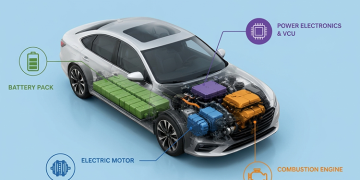
Plug-in hybrids combine an internal combustion engine with a rechargeable battery. Official testing uses a calculation known as a “utility factor” to estimate how frequently a vehicle will operate on electric power.

However, real-world data shows that many PHEV owners do not charge their vehicles as frequently as testing assumptions suggest. As a result, the vehicles rely more heavily on their petrol or diesel engines, increasing their actual fuel consumption and emissions.
T&E also noted that even when PHEVs are driven in electric mode, their real-world fuel consumption can be higher than official estimates.
The European Union has been working to revise utility factors so that official emissions figures better reflect real-world driving conditions.
The latest findings highlight the growing gap between laboratory testing and actual vehicle use. The findings also add to the wider debate over whether plug-in hybrids should continue to receive regulatory benefits as the automotive industry moves towards fully electric vehicles.
T&E argues that more accurate real-world data should be used when setting emissions standards and assessing the environmental performance of PHEVs.