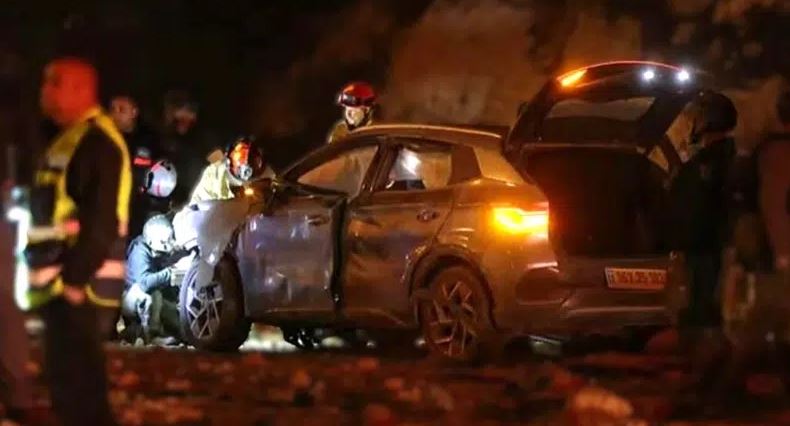
KATHMANDU: A BYD Atto 3 survived a rocket blast in Jerusalem on March 1, with all five occupants escaping alive despite the vehicle being positioned near the edge of a deep impact crater.
According to Chinese media reports, local emergency service Magen David Adom confirmed that five people were inside the vehicle at the time of the explosion. The driver sustained moderate injuries, while four passengers suffered light injuries and shock. All were rescued without the need for specialized cutting equipment.
Images from the scene show the Atto 3’s cabin structure remained intact after the blast. The A, B, and C pillars did not collapse, and the high-strength steel body structure absorbed the shockwave and flying debris. The door handles and mechanical locks remained operational, allowing quick evacuation.

The vehicle’s LFP Blade Battery, integrated into BYD’s e-Platform 3.0 architecture, showed no signs of fire or thermal runaway. Despite partial displacement towards the crater, the battery system remained stable. Hazard lights were also seen functioning after the impact, indicating the low-voltage electrical system remained active.
The Atto 3 holds a 5-star safety rating from Euro NCAP and ANCAP, with a 91 percent score for adult occupant protection. The model has also recorded strong global demand, crossing 1 million units in cumulative sales within three years of its international debut.
In Nepal, the Atto 3 is distributed by Cimex Inc.. Since its local launch in 2022, a total of 4,246 units have been sold as of early 2026, making it the highest-selling model from BYD in the Nepali market.
The Jerusalem incident highlights the structural strength and battery stability of BYD’s electric SUV under extreme real-world conditions.