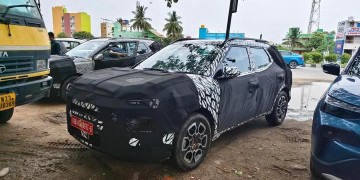
KATHMANDU: Nepal has started importing electric vehicles (EVs) through the Korala border with China.
Traders began using the Korala border point for Nepal-China trade as an alternative route to bring in EVs after two other borders — Rasuwagadhi and Tatopani — remained closed for the past two months.
With the major border points at Rasuwagadhi and Tatopani closed for the past two months, traders have begun using Mustang’s Korla border as an alternative route to bring in EVs.
Ramesh Khadka, Customs Officer at the Mustang Customs Office, said 80 EVs have arrived at the customs yard in Nechung. According to him, these include vehicles from BYD and Jaecoo. “So far, 80 BYD and Jaecoo cars have arrived at the customs point. We have been informed that more are underway,” Khadka said. “However, exact number of vehicles brought by these companies is not known as customs clearance process has not begun.”
Cimex Inc represents BYD in Nepal, while SPG Automobiles is the authorized distributor for Omoda/Jaecoo in the domestic market.
The Nechung area in Mustang is abuzz with activities since the Department of Customs resumed operation of Mustang customs few weeks ago.
In addition, 47 containers carrying textiles, electronics, cosmetics and other goods have also arrived at the customs yard.
The Nechung area in Mustang is abuzz with activities since the Department of Customs resumed operation of Mustang customs few weeks ago.
According to Khadka, customs clearance for goods brought from China is conducted at the customs office in Nechung which is located around 14 km on the Nepali side from the Korala border, while the branch office of Prabhu Bank in Lomanthang has been designated for revenue payments.
Although Korala is roughly four times farther than Tatopani or Rasuwagadhi, it has become a viable alternative for Nepal-China trade after the other two border points became non-operational.
Automobile dealers received bookings for over a thousand vehicles during the NAIMA Nepal Mobility Expo and NADA Auto Show held in August for deliveries during the Dashain-Tihar festive season which kicks off next week. However, with the two traditional routes blocked, automobile distributors are importing vehicles via Korala border despite higher costs and longer transport times.
Importers say using Korala is faster than shipping via India using sea routes.
Road Condition
Korala is about 470 km from Kathmandu — roughly four times longer than the routes to Tatopani (113 km) and Rasuwagadhi (127 km). The road is a mix of paved and graveled sections. The road section from Nagdhunga to Mugling (100 km) is currently being upgraded into a four-lane road. According to Department of Roads, 35 km of this section has new pavement, 50 km has old pavement and the remaining sections are uneven.
The upgrading of Mugling-Pokhara (80 km) section into a four-lane highway is nearing completion. From Pokhara to Malgadhunga (67 km), the road is fully paved. Likewise, from Malgadhunga to Korala (202 km), about 60 km is paved, while the remaining is graveled.
The Beni-Jomsom-Korla road passes through three districts: 13 km in Parbat, 33 km in Myagdi and 156 km in Mustang. Of this, 7 km in Parbat, 26 km in Myagdi, and 60 km sections in Mustang have been paved, according to Dhruva Kumar Jha, project chief of the Kaligandaki Corridor Road Project.
In Mustang, the road is paved up to Chhusang, while the remaining 90 km to Korla is graveled.
Jha said loaded containers can travel along the corridor without any issue. “Although landslides and floods have damaged roads in places like Sirubari (Myagdi) and Ghami (Mustang), repair works are expected to be completed within 10–15 days,” he added.
However, vehicles heavier than 25 tons cannot cross Bailey bridges at three locations of Beni-Jomsom-Korala Road.