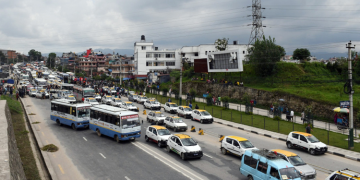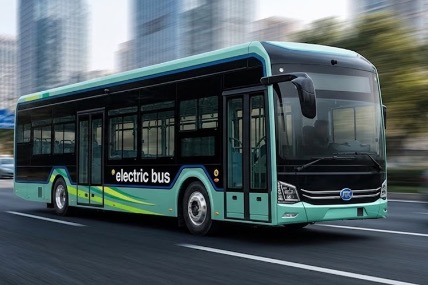
KATHMANDU: The government has announced plans to provide subsidies or concessional loans for the purchase of public electric vehicles. The provision is included in the newly approved National Transport Policy 2083.
According to the policy released by the Ministry of Infrastructure Development, the government will introduce Viability Gap Funding (VGF) and other incentive mechanisms to promote EV adoption while discouraging the import of fossil fuel-powered vehicles.
Under the policy, operators purchasing electric buses and other public EVs will be eligible for government subsidies or low-interest loans. The Ministry of Finance has been tasked with implementing the VGF scheme within one year, with support from the Ministry of Infrastructure Development and the National Planning Commission.
The government expects the scheme to encourage greater private sector investment in public electric transport.
Although EVs now account for more than 70 percent of Nepal’s private vehicle market, the adoption of large electric buses has remained limited due to their high upfront cost. The government believes financial support will help transport operators invest in larger EVs.
The policy states that the VGF program aims to reduce the initial cost of electric buses, attract private investment, cut air pollution, and lower the country’s fuel import bill.
The government has also announced an e-Bus, e-Taxi and e-Micro Conversion Program to increase the share of electric vehicles in public transport. The program is scheduled to be implemented within the next one to three years by provincial and local governments, in coordination with the Department of Transport Management and the private sector.
To support Nepal’s clean energy transition, the government has identified e-mobility as a key national priority. It plans to prepare an E-Mobility Transition Roadmap and gradually electrify both private and public transport over the coming decade.
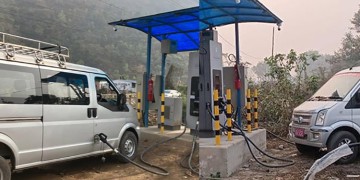
The policy also calls for expanding the nationwide EV charging network, accelerating the rollout of battery swapping facilities, and introducing end-of-life battery management and recycling guidelines to ensure the safe disposal and recycling of EV batteries.