KATHMANDU: Hyundai has revealed key details of its upcoming smallest electric car, the Ioniq 3. The new model will sit below the Ioniq 5 and Ioniq 6 in size and price.
The Ioniq 3 is a five-door electric hatchback aimed at global mass markets. Hyundai is positioning it as a practical and cost-effective EV. Camouflaged test cars have been spotted several times, suggesting the launch is nearing, according to Carscoops.
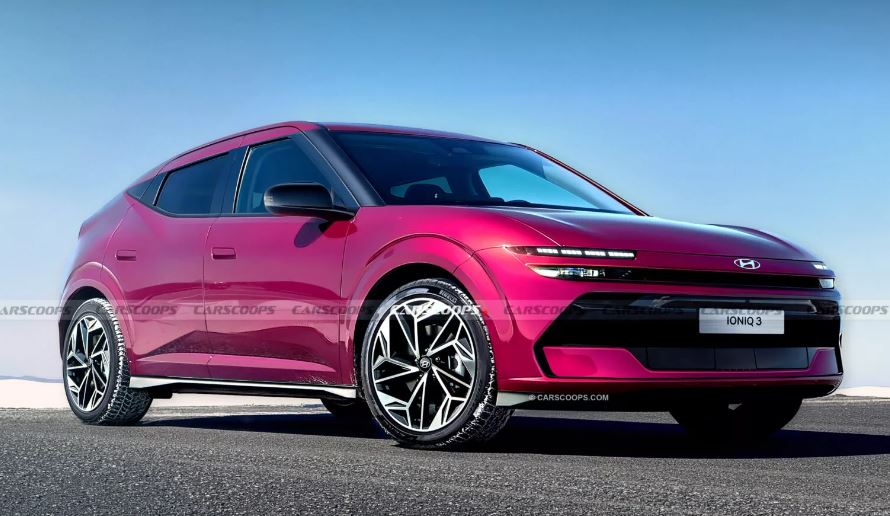
The production Ioniq 3 is based on the Concept Three. The design is simpler and more people-friendly than Hyundai’s larger EVs. Spy images show a traditional battery cooling grille and slim pixel-style daytime running lights placed above the main headlamps.
The side profile features clean lines and wider windows than the concept. Hyundai’s “steel art” design language is clearly visible. At the rear, the car gets a full-width LED taillight with pixel elements and a split glass hatch. The aggressive diffuser from the concept has been dropped in favor of a small spoiler.
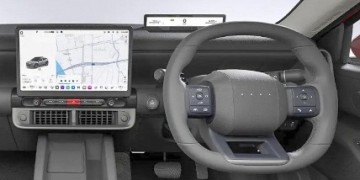
The cabin marks a major shift from current Hyundai interiors. It features a fully digital instrument cluster and a large standalone central touchscreen. Both displays are separated for better visibility.
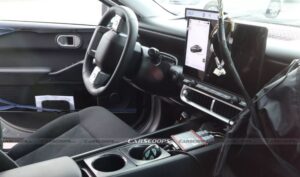
The infotainment system runs on Hyundai’s new Pleos Connect platform. It is based on Android Automotive OS. Cloud-based user profiles and voice control are supported. Physical buttons for climate control are retained below the screen.
The Ioniq 3 has a five-seat layout. It also offers Apple CarPlay Ultra, ambient lighting, and Level 2 driver assistance features.
The Ioniq 3 is built on a simplified E-GMP electric platform. Unlike the Ioniq 5 and 6, it uses a 400-volt system to reduce costs. It shares its core architecture with the upcoming Kia EV4.
The standard version is expected to use a single front-mounted motor. Output is rated at 201 hp (150 kW). A dual-motor all-wheel-drive N version is expected later.
Hyundai is likely to offer two NCM battery options. These include a 58 kWh pack and a larger 81.4 kWh pack. The larger battery is expected to deliver a range of up to 644 km. Both versions will support V2L and V2G functions.
The Hyundai Ioniq 3 is expected to debut within six months. Global market launch is planned for 2027.