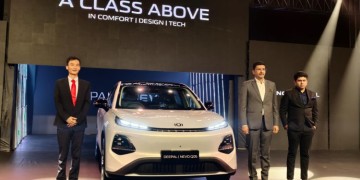
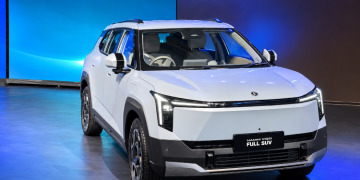
KATHMANDU: MAW Vriddhi, the official distributor of Dongfeng’s Nammi brand in Nepal, has launched its first electric SUV lineup at the NADA Auto Show 2025.
The company introduced two variants, the Nammi Vigo E2 and Nammi Vigo E2 Plus, priced at Rs 3.799 million and Rs 4.099 million respectively.
The Vigo E2 comes with a 45 kWh battery pack, while the Vigo E2 Plus is equipped with a larger 52 kWh unit, offering customers more choice in range and performance.
The SUV is powered by a 99kW motor, which delivered impressive performance during our test ride. Its handling is light and effortless, making it ideal for Nepal’s diverse road conditions. The driving experience is refined, whether you are navigating city traffic or tackling hilly terrain.
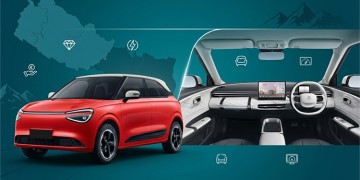
The Nammi Vigo E2 offers welcome and memory seats, ambient lighting synced to music, a unique “Heaven and Earth” tailgate and support for 167kW DC fast charging (via 3C charging technology), which are the firsts in its segment.
It also features Level-2 ADAS, wireless charging, Wi-Fi connectivity, a heated and ventilated driver’s seat, a welcome sound system, and adaptive automatic headlights.
The Nammi E2 has integrated modes for navigation, rest and snow integrated into the AC controls; while it has a voice command system for both the car and connected mobile devices.
A large 12.8-inch infotainment screen, an 8.8-inch digital instrument cluster, and a high-definition 360-degree camera enhance driving ease and safety. The car offers 35 storage compartments, adaptive cruise control, and a uniquely styled LED lighting setup (T-shaped headlamps and triangular pixel-style taillights).
The Vigo E2 Plus comes with larger, more stylish 17-inch aluminum alloy wheels. Inside, it offers enhanced luxury features, including frameless doors and memory seats. It also includes an Intelligent AC System with special modes such as Baby Care and Rest Mode, which are not available on the standard Vigo E2.
With MAW Vriddhi starting sales of the Nami Vigo at an attractive price, a new chapter of price war can be considered to have begun in the Nepali car market.