KATHMANDU: With the growing adoption of electric vehicles (EVs) in Nepal, the management of end-of-life batteries is emerging as a significant concern.
In the absence of a comprehensive strategy for the disposal of EV batteries, international models such as Redwood’s battery reuse initiative offer valuable insights for developing sustainable battery management solutions in the country.
A notable example is Redwood Materials, a U.S. based company specializing in battery recycling and manufacturing, founded by JB Straubel, a former executive at Tesla.
Recently, Redwood introduced a new division called Redwood Energy, aimed at repurposing used EV batteries into energy storage systems.
While these batteries may not efficiently power vehicles anymore, many still hold up to 50% of their original capacity. Instead of sending them directly to recycling, Redwood transforms them into large, modular storage units that can be used by homes, power grids, or commercial establishments.
The company handles over 20 gigawatt-hours (GWh) of batteries each year, which is equivalent to the batteries from around 250,000 EVs. These batteries are tested and, if suitable, placed into adaptable storage systems. Currently, Redwood has 1 GWh of repurposed batteries available and aims to increase this to 5 GWh in the next year.

Their first significant project is already up and running a 12-megawatt micro-grid at their Nevada facility, constructed using second-life batteries. This micro grid powers a data center and has enough energy to supply around 9,000 homes.
While Redwood’s initiative is gaining international attention, its significance for Nepal is equally crucial. With abundant hydropower resources, particularly during the monsoon season, Nepal could implement a similar approach in the future.
Repurposed EV batteries could be utilized to store surplus energy during peak generation times and provide power during the dry months when energy production decreases.
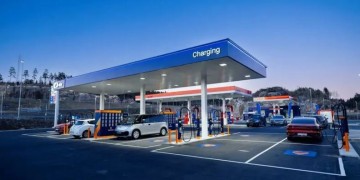
Simultaneously, EV charging infrastructure is expanding rapidly along key highways, with active involvement from the NEA and private sector players. The integration of repurposed battery storage into these charging stations could serve as a strategic backup during unplanned power outages—a persistent challenge across the country.
For EV users, this ensures uninterrupted mobility; for service providers, it offers enhanced reliability and customer confidence.
As Nepal moves towards a more sustainable mobility ecosystem, such adaptive energy solutions could play a vital role in bridging infrastructure gaps and driving long-term value.