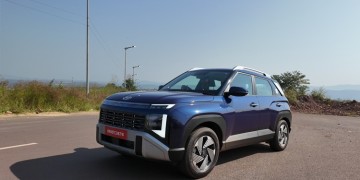
GOA: Hyundai Motor India opened bookings for the second-generation Venue in India on November 4. Soon after the bookings opened, its media drive began in the tourist state of Goa from November 5.
Initially, test drives were given to media personnel from India. Journalists, along with a large team from Hyundai Motor India, conducted the media drive in Goa. Many media representatives from Nepal also participated in the event.
A team of 23 people led by the Laxmi Group, Hyundai’s official dealer and assembler in Nepal, traveled to Goa for the test drive. The Venue, which appeared in the media right after bookings opened in India, was made available for a test drive six days later.
Hyundai’s Venue should be considered one of the brand’s successful models in Nepal. According to Laxmi Intercontinental, the Venue, first launched in 2019, has sold 3,000 units in the past six years.
After the success of the first generation, it was natural to be curious about what the new-generation model would offer. When it arrived with several new features, it was equally natural to want to learn more and experience it firsthand.
Whether on the Goa coast, in the Portuguese colony, or through the industrial areas, I drove the Venue for about 100 kilometers across various terrains. The new Venue feels quite different from the previous model. However, the main features that make a big difference are as follows:

Suspension
How comfortable a car feels largely depends on its suspension. Hyundai has made extensive improvements in the new-generation Venue. The suspension now feels much smoother on potholes and rough roads.
The new Venue uses McPherson struts with coil springs at the front and a torsion beam axle with coil springs at the rear. Its smoothness can be felt immediately while driving.
Steering
Hyundai has introduced a newly designed steering wheel in the new Venue. The three-spoke ‘D-cut’ steering wheel is very attractive, and the vehicle’s turning radius feels better than before.
The paddle shifters behind the steering wheel make highway driving more exciting. Hyundai’s logo has been replaced with a four-dot ‘mascot’ on the steering wheel.

Dashboard design
Hyundai’s signature ‘H’ design can be seen on the dashboard, connecting the AC vents and center area.
The ambient lighting in the top variant, the modern gear knob design, and the full panoramic display made by combining two 12.3-inch screens are very appealing. Overall, the seat design also feels quite comfortable.
Tech features
While testing the 1.0-liter turbo engine variant, the drive almost felt like an EV. The new model now includes ADAS Level 2, which was not available before. This system provides a wide range of information and driver assistance features.
There are 16 ADAS functions, including Lane Following Assist, Lane Keep Assist, Lane Departure Warning, Forward Collision Avoidance Assist, Smart Cruise Control, High Beam Assist, and Leading Vehicle Departure Alert.

Safety features
The Venue performs well in terms of safety. It includes Auto Hold, Traction Control, front Parking Sensors, six airbags, and disc brakes on all wheels, a Tire Pressure Monitoring System, Electronic Stability Control, and a Vehicle Stability Management System.
Additionally, the 360-degree camera is very helpful when maneuvering the vehicle.
Drive modes and traction control
The new-generation Venue now offers traction control with Sand, Mud, and Snow modes.
Like Hyundai’s EVs, it also features Eco, Normal, and Sport driving modes. Drivers can enjoy different experiences by selecting modes according to road conditions.

Lastly
After driving the new-generation Venue for 100 kilometers on various roads in Goa, it’s clear that the model has strong potential in the Nepali market. The Venue appears to be an excellent option for those looking for a petrol SUV.
Hyundai’s refined 1.2-liter petrol, 1.0-liter turbo petrol, and 1.5-liter diesel engines are all fuel-efficient. Those who previously found the rear legroom insufficient will find more space in the new Venue.
Major updates to the exterior design, along with an increased wheelbase, width, and height, make the vehicle look larger and more premium.
Which variants will be launched in Nepal and at what price is yet to be confirmed. The details are expected to be revealed by the first quarter of 2026.